
Introducing the African Health Systems PhD Student Fund
A conversation with a founding donor, Olakunle Alonge, PhD ’13, MPH ’09.
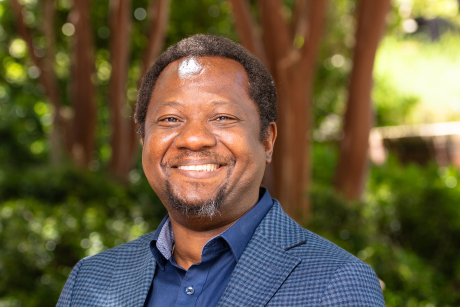
The Department of International Health is proud to announce a new fund to support promising students who are dedicated to advancing health systems research in low- and middle-income countries. The scholarship—the African Health Systems PhD Student Fund—will support exceptional students who would otherwise be unable to attend the School.
Alumnus and adjunct faculty member, Olakunle “Kunle” Alonge, PhD ’13, MPH ’09, initiated the fund with a generous donation when he left Hopkins to lead the Sparkman Center for Global Health at the University of Alabama, Birmingham. From lack of funding to scarcity of advanced degree programs in the region, he recognizes the many challenges scholars living in sub-Saharan Africa can face.
“The fund started by Kunle captures the vital link between training future leaders and strengthening health systems,” says Sara Bennett, PhD, MPhil, professor and vice chair of International Health. “Our Department flourishes through engagement with the extraordinary talent emerging from Africa. I’m confident this initiative will nurture both regional leadership and shared global learning,” she adds.
In the conversation below, Kunle elaborates on his motivation for founding the scholarship and how it can improve health systems research and lead to fundamental changes within global health. A fully funded Health Systems PhD fund will help the Department expand student representation of scholars and leaders with the knowledge and insights to help advance the science and improve health and well-being globally. While his and other gifts got the Department part of the way, we will still need more to completely fund a scholar.
What was your inspiration for founding the African Health Systems PhD Scholarship Fund?
Johns Hopkins is fantastic place to learn. I've been so blessed and privileged to have received support throughout my journey at Hopkins. And I'm very conscious that not many people from sub-Saharan Africa have had similar opportunities.
This scholarship has been at the back of my mind for some time. I knew I would love to give back to the School, particularly in a way that allows people who have very brilliant ideas, from places you wouldn’t necessarily expect, to take full advantage of a Hopkins education.
I'm hoping that this will be the first of many such scholarships. Health systems are so intricately linked to the local context that it's almost impossible to advance knowledge in our field without involving people who have direct experience with those systems.
I see this investment as a win-win—as strengthening both sides of the bargain. It's a win for somebody who's coming from a lower- or middle-income setting, and it’s a win for the institution by helping to advance health systems science.
“Kunle’s own journey—from scholarship-supported training in Nigeria to becoming a leading global health and implementation science scholar—shows exactly why this fund must reach talented people who lack the social networks and financial support to ever imagine themselves at Hopkins.”
— David Peters, MD, DrPh ’93, MPH ’89, professor emeritus, former IH chair, and Kunle’s doctoral adviser
You received several scholarships to attend the Bloomberg School. Would you have been able to attend Hopkins without them?
No, I probably would not have been able to come to a place like Hopkins without the scholarship support I received. I really was blessed because a Ford Foundation scholarship supported me through my MPH. Then, I received several scholarships from the Department, including the Department of International Health PhD Scholarship and the Robert and Helen Wright Fund, to do my doctoral work. Because of that support, I was able to study without any distraction. Being a scholarship beneficiary has shaped a lot of my thinking. I’m grateful for the support to this day.
You mentioned that one of your aims for this scholarship is to attract people who lack the social support to attend Hopkins. How did you come to focus on this population?
When I was at Hopkins, few of our doctoral students were from low-income settings. It’s critical for our teaching and research both to learn from and train people who come from settings where we are working. I know first-hand how many people would never even imagine it was possible to go to Hopkins. But, it’s not always about money. It can also be about networks and access.
I want to focus on those people who are on the margins of society. They have incredible contributions to make, and that’s especially true of my field, health systems.
There are many people who, despite the disadvantages they’ve been dealt, have potential to create significant change. Global health researchers meet people like that all the time. We see their potential. I want there to be a route for those people to come to Hopkins to learn and share.
The greatest resource on this planet is people. Helping to unleash the potential of young, exceptional people on the margins can lead to a lifetime of returns. That’s how a multiplier effect sets in. At the end of the day, if you can contribute to just one person, that one person can change the lives of millions.
The African Health Systems PhD Student Fund will help the Department of International Health provide doctoral funding to recruit the best and brightest students who help advance the mission of the Department. If you are interested in making a contribution to this work, please select “other” and write in “African PhD Fund” on the Department's giving page.
Interview conducted and edited by Brandon Howard, communications manager, and Sara Woodward, director of philanthropic engagement, in the Department of International Health at the Johns Hopkins Bloomberg School of Public Health.