status

  • Operating in maintenance mode.

Publications

Showing 61 - 80 of 85 results

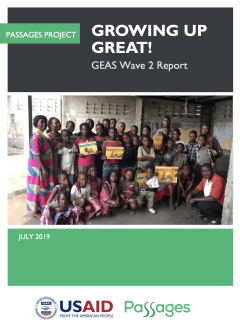
GROWING UP GREAT! GEAS Wave 2 Report - Passages Project

Publication Type
Report

The Global Early Adolescent Study (GEAS) assesses the formation of gender norms and their relation to health and behavioral outcomes during adolescence. In Kinshasa, the study also evaluates the impact of Growing Up GREAT! (GUG!), a multi-level intervention that works with young adolescents, their families and other community stakeholders to shift norms about society and gender towards improved health. This report outlines the methodology, and cross-sectional and longitudinal findings of the second year of the study.

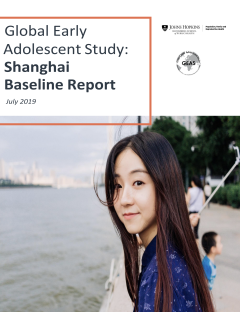
China Shanghai Baseline Report

Publication Type
Report

The GEAS took place in a working-class neighborhood in Shanghai. In 2010, the population of Zhabei District (now incorporated into Jing’an District) was 830,476, and home to Shanghai’s largest proportion of urban poor and internal migrants. The Zhabei district is divided into 9 sub- districts.

There are a total of 30 secondary schools serving nearly 16,000 children between the ages of 11 and 15 located in the Jing’an district. There are two main types of secondary schools covering Grade 6 to Grade 9: public schools and private schools. Public secondary schools enroll students who live around the school according to proximity and provide tuition waivers based on the national nine year mandatory education policy. Private secondary schools enroll students who live scattered in the whole district or even the whole city, and students pay tuition fees ranging from USD $2,400-13,000 per year. There is income disparity between the two types of schools, with poor children more likely to attend public school than private schools. Adolescents were selected from public schools in two less-developed sub-districts of the Jing’an district.

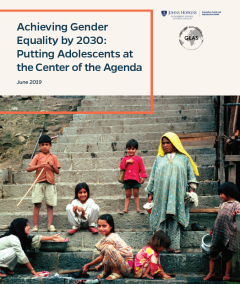
Achieving Gender Equality By 2030 - Putting Adolescents at the Center of the Agenda

Publication Type
Report

Achieving Gender Equality by 2030: Putting Adolescents at the Center is a report based on the analysis and recommendations of a global coalition of adolescent health experts. It proposes that the world will never achieve the United Nations fifth Sustainable Development Goal (SDG5), which aims to “achieve gender equality and empower all women and girls” by 2030, “by focusing on girls and women alone and excluding boys and men.”

This report argues for a broader set of indicators for tracking progress on achieving SDG5 that would include, among other things:

• Tracking the percentage of both boys and girls who at the community level feel that they can ask for help when needed since there appears to be a strong relationship between voice and empowerment

• Tracking the percentage of boys and girls who feel safe in their neighborhood, as safety and security is a critical factor in the healthy development of both boys and girls; for example, the new study on adverse childhood experiences found a third of children reported a persistent fear of physical harm

Additionally, it argues that to achieve sustained gender equality, research, policies and programming should be grounded in a ‘life-course framework,’ which would “recalibrate the planning of interventions for specific age groups and enhance the potential impact of development programming.”