New Study Finds Majority of Older Dually Eligible Medicaid-Medicare Recipients in Six States Opt for Hiring and Paying Caregivers of Their Choosing
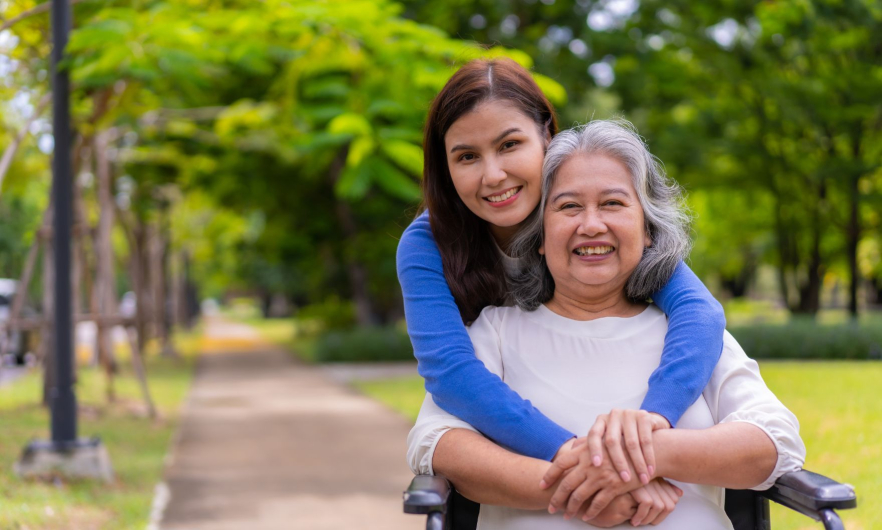
A study from researchers at the Johns Hopkins Bloomberg School of Public Health finds that a majority of older adults dually enrolled in Medicaid and Medicare in six states are opting to hire their own caregivers versus working through an agency. This option, known as self-direction, gives enrollees more say in who they hire as caregivers—including friends and family members—and when their caregivers work and what care they provide.
For their study, the researchers used 2021 national Medicaid claims data linked with Medicare records of dually eligible beneficiaries ages 65 and older. The researchers identified the portion whose Medicaid personal care benefits supported self-directed services versus traditional agency-based services in six states: California, Connecticut, Massachusetts, New Jersey, New York, and Wisconsin.
Overall more than half of older adults receiving personal care in participating states used self-direction versus agency-based care.
The study was published online October 15, 2025, in Health Affairs Scholar.
Self-direction was developed to address caregiver shortages and support individuals’ health decision-making autonomy, a concern raised by disability rights advocates. The option enables older adults to select caregivers they feel best understand their needs, including relatives and friends. Compared with individuals receiving agency-based care, the study found that self-direction users have a higher prevalence of chronic conditions, greater home health use, and higher Medicare costs. These patterns highlight the complex health issues facing those who opt to use the self-direction option.
“Our findings show just how central self-direction has become in helping older adults manage daily care needs, especially for those with chronic and complex health conditions,” says senior author Katherine Miller, PhD, an assistant professor in Health Policy and Management. “Understanding who uses self-direction, and how these programs are functioning on the ground, is critical as states look to strengthen caregiver support and prepare for an aging population.”
The study also found that self-direction use ranged from 12% in Connecticut to nearly universal use in California and New York, and more than half use self-direction in Massachusetts. Rural participation remained notably low, despite the potential for self-direction to help address workforce shortages by allowing family caregivers to provide care.
The authors note that further research is needed to examine how self-direction dollars are spent, how consumer and caregiver outcomes are affected, and how the model shapes overall Medicare and Medicaid costs.
“Self-direction offers older adults a way to remain at home, maintain autonomy, and receive care of their choosing that aligns with their preferences,” lead author and doctoral student Yiqing Kuang adds. “As the model grows, policymakers need clearer evidence on program effectiveness, equity, and the impact on both consumers and caregivers.”
“Paying Family Caregivers: Self-Direction in Medicaid Personal Care” was co-authored by Yiqing Kuang and Katherine E.M. Miller.
This study was funded in part by grants from the National Institutes of Health, the National Institute of Aging (1R21AG089381-01A1) and the Johns Hopkins Bloomberg School of Public Health.