
Student Spotlight: Suzanne Joyce Block
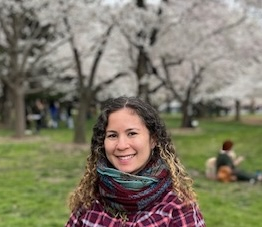
Meet Suzanne Block
Suzanne Block is a PhD candidate in the Department of Health, Behavior and Society at the Johns Hopkins Bloomberg School of Public Health. Her research focuses on the health and well-being of adolescents and young adults living with hepatitis B.
- Program: PhD in Social and Behavioral Sciences
- Entry year: 2022
- LinkedIn profile
- Hometown: Philadelphia, PA
- Fun fact: I love hula hooping!
What sparked your interest in public health?
My family’s story and personal experience as a pediatric nurse. My Korean American mother has chronic hepatitis B, likely as a result of mother-to-child transmission. However, she was only formally diagnosed in adulthood, and upon sharing this news, she faced discrimination in her personal and professional life. My parents redirected their lives to focus on hepatitis B research and advocacy, and I grew up meeting other families affected by this disease and attending community events and rallies to raise awareness and advocate for change.
I also realized how fortunate I was to receive the hepatitis B vaccine at birth and to live without concerns of hepatitis B-related liver disease or liver cancer. This was public health in action.
Then, as a pediatric nurse, I witnessed the downstream effects of inequitable systems, the unequal burden of disease, and how stigma and underrepresentation exacerbate health disparities. These experiences shaped my worldview and continue to motivate me to pursue a career in public health.
What led you to join the Department of Health, Behavior and Society?
My personal and professional experiences highlight the tensions we navigate when exercising our personal agency, building community networks, and addressing social and structural inequities. My work has been grounded both globally and locally, with a primary focus on hepatitis B and liver cancer, as well as the health and well-being of adolescents and young adults. To this end, I hope to situate my work at the intersection of health, culture, and medicine, with community voices shaping the narrative.
I found my values and interests aligned well with HBS. This included strengthening my theoretical and methodological understanding of the social and behavioral factors that shape health outcomes. HBS faculty have taught some of my favorite classes, including Sociological Perspectives and Theory and Practice in Qualitative Data Analysis and Interpretation. I’ve then been able to apply this coursework to the research I’ve done with HBS faculty and others, and now, with their support, for my dissertation research.
What’s an academic highlight you've experienced during your time as an HBS student?
I have really enjoyed teaching! I entered this program primarily focused on building my research skills, without giving equal attention to other potential areas of training as a PhD student. However, working as a teaching assistant has been a highlight. I have assisted with content and methods courses I took at Hopkins or elsewhere, which has allowed me to reengage with the materials from this new perspective.
I have since pursued a Gordis Teaching Fellowship, which begins this spring. Under this fellowship, I will be teaching an undergraduate course that I developed. The course is designed to introduce students to the intersection of the creative arts and expression within public health research, examining the context and topics where arts-based approaches can (and have been) utilized to understand health experiences. As someone focused on adolescent and young adult health and the complexities of chronic diseases in various contexts, I find myself drawn to thinking about how to creatively engage individuals and communities. Creating the course has been fulfilling, and now I am looking forward to this opportunity to teach and explore this evolving passion!
What’s a research highlight you have experienced during your time as an HBS student?
I was recently awarded an NIH F31 Predoctoral Fellowship to support my dissertation research and training. My dissertation focuses on the health and well-being of adolescents and young adults living with hepatitis B, utilizing a combination of quantitative, qualitative, and participatory arts-based methods. This work is the culmination of everything I am passionate about and builds upon my training so far at the Bloomberg School. The receipt of this award is very much a reflection of the supportive environment cultivated with my adviser, friends, and broader community.
This award is an exciting opportunity because it supports mentored research training that prepares me to become an independent scientist. Writing this grant (and now being a recipient) has facilitated the development of a collaborative and diverse mentorship network with expertise in specific areas relevant to my research and training goals.
Overall, I want to refine my skills as a researcher while producing public-facing work to raise awareness about hepatitis B and increase access to care, now more than ever. I’m thrilled to have this support to do so.
Outside of public health, what are some of your hobbies, interests, and personal passions?
I have always loved the outdoors, and I recently became a mom to a beautiful baby boy. Outside of my public health work, I spend my time with my husband and our son. He currently loves “things that go,” so going on walks or just being outside is an activity we all enjoy because you never know when we’ll see a plane, car, or bike. I’m now looking forward to adding more hiking and camping to our activity list over the years, and teaching him to hula hoop! Life moves at 100 mph between these worlds, but it has been a lot of fun because sharing experiences with him is the most fulfilling thing. My son also helps bring me out of my work and back into things I used to love, and that is something I really appreciate.
What are some of your favorite places in Baltimore?
The American Visionary Art Museum! This is an incredible national museum that showcases visionary art, which they define as “art produced by self-taught individuals, usually without formal training, whose works arise from an innate personal vision that revels foremost in the creative act itself.” Exhibits feature works by individuals from both local and global communities, including recently produced pieces and those from decades past. It is always inspiring to see what works they’ve selected and I’ve attended events over the years too. I highly recommend visiting this museum if you are in Baltimore!
What advice do you have for prospective students interested in joining the HBS community?
Public health is more important than ever and so is understanding and addressing the dynamics between social structures, personal agency, and social change. HBS can help prepare you to address these complexities. It is also a place where you can ground yourself in social and behavioral theory, while drawing on strengths and opportunities in other departments. In my experience, exploration, collaboration, and exposure to different teams and projects are encouraged. I’ve appreciated my theoretical grounding in HBS and the mentorship from my HBS advisor, while feeling empowered to look elsewhere in the School community to meet my specific research and training goals. All that to say, this is a community where you should be prepared to open yourself up to new opportunities while taking the initiative to pursue your public health interests.
This interview has been edited for length and clarity. Views expressed are the subject's own.