Student Spotlight: Pratik Prashant Neve
Volunteering as a data collector for a serological survey during the COVID-19 pandemic ignited Pratik's passion for public health.

Meet Pratik Prashant Neve
- Degree Program: MSPH
- Area of Interest: Population Health
- Hometown: Lonavala, Maharashtra, India
- Previous Degrees Earned: Master of Science in Health Science, Savitribai Phule Pune University (Pune, India), Master in Population Studies, International Institute for Population Sciences (Mumbai, India)
- Fun Fact: I started baking cakes after coming to the U.S. and I love it!
What sparked your interest in public health?
My interest in public health was sparked when I volunteered for a serological survey during the COVID-19 pandemic to identify community hotspots. That experience showed me how population-level data can inform rapid decision-making and protect communities.
Why did you choose the Bloomberg School?
I chose the Bloomberg School because of its global reputation and the unparalleled opportunities it offers to work with leading faculty on meaningful projects. I was drawn to the School’s strong emphasis on both rigorous methods and applied practice, which allows students to contribute to real-world public health solutions while still in training.
What led you to join the Department of Population, Family and Reproductive Health?
Considering my background in population studies, I was interested not only in measuring demographic trends but also in understanding the health systems and social factors behind them. When I learned about the Department of Population, Family and Reproductive Health, I felt it was the right fit. The department’s life course framework, which connects maternal, perinatal, child and adolescent health, sexual and reproductive health, and population health, aligned perfectly with my interests.
What drew me most was how PFRH combines rigorous training with opportunities to apply that knowledge in real projects through its many research centers and initiatives. I wanted a department where I could use my population studies background in a way that directly contributes to improving reproductive and family health, globally.
My interest in public health was sparked when I volunteered for a serological survey during the COVID-19 pandemic to identify community hotspots. That experience showed me how population-level data can inform rapid decision-making and protect communities.
What is one experience in PopFam that stands out as a favorite or most memorable?
I absolutely enjoyed the Advanced Demographic Methods course with associate professor Li Liu. It was just 4 students in that class - a dream for an introvert like me! The format of the class, the content, the exams, and the assignments were the most interesting of all the classes I have taken.
Tell us about your field placement.
For my field placement, I am working with associate research professor Dustin Gibson on two projects. The first focuses on evaluating a vaccine logistics management system in Nigeria, looking at how digital platforms can strengthen immunization supply chains. The second is a systematic review of mobile phone surveys in low and middle income countries, examining how they are used to collect health and disease data.
I am also working with assistant research professor Shatha Elnakib on a project that explores the experiences of early career midwives in conflict affected regions of Somalia and Nigeria. This work has given me insight into both the challenges and resilience of health providers in fragile settings.
Tell us about your work as a teaching assistant.
I have had the chance to serve as a teaching assistant for professor Stan Becker’s course on Population, Health and Development, where I lead lab sessions and help facilitate class debates as a judge. I also TA for professor M.E. Hughes in the course Population Dynamics and Public Health. In that class, my background in population studies has been especially useful for supporting students and helping them work through complex demographic methods.
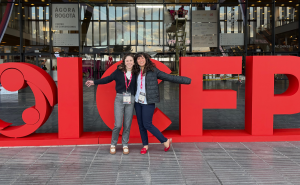
On the research side, I worked with associate professor Linnea Zimmerman on determinants of unmet need for contraception among adolescents in the Rohingya refugee camps. In that project, I applied a contraceptive choice scale developed by professor Caroline Moreau and team, which gave me valuable experience in connecting theory with applied research in humanitarian settings. This work was also selected for a poster presentation for the 2025 International Conference on Family Planning.
What do you hope to do or accomplish after graduation?
I hope to continue working at the intersection of global reproductive health, data systems, and policy. My long-term goal is to lead evaluation and research that informs programs improving reproductive autonomy, maternal health, and child well-being. I also hope to contribute in the field of digital health, especially in the data collection methods in LMICs, where the household surveys are very expensive to conduct.
What are some of your favorite places, experiences, or aspects of living in Baltimore?
I love hiking, and one of my favorite spots is the Stony Run Trail near the Homewood campus. Last fall, when the stream running beside the trail had dried up, I decided to hike along the stream bed itself. It turned into a really fun and memorable experience, and it felt a bit like home, as I come from a small town with a lot of unexplored trails.
What advice do you have for a prospective student interested in joining the PFRH community?
Be open to exploring different research areas and connecting with faculty early. The Department offers a wide range of opportunities, and mentorship is one of its strongest assets. Don’t hesitate to get involved in projects, even if they push you outside your comfort zone, that’s where the most growth happens.